Meet Monique
Practical strategist. Innovative thinker. Human connector.
I believe people deserve environments where human connection can flourish.
That belief became sharp for me after a moment I still think about often:
A few years ago, my husband handed me a newspaper article about two people in Europe who had died alone, in the same neighborhood, and no one had noticed for weeks. I was shocked. But I wasn’t surprised. What unsettled me most was how plausible it felt.
We read stories like this, call them tragic, and shake our heads. We tell ourselves they are sad exceptions, not something we can change.
I don’t accept that.
Loneliness is deeply personal, but connection is shaped by the environments we build: how workplaces welcome new people, how neighborhoods invite participation, whether programs give people a reason to return, and whether public systems make room for relationships or treat them as outside the scope of the work.
We design these conditions. We can design them better.
That starts with taking social health seriously, not as a soft idea or a private luxury, but as a basic human requirement. It means asking an honest question of the systems and structures we create:
Do they make it easier for people to know one another, support another, and feel that they have a place here - or harder?
Disconnection feels private, often resulting in mental and physical health challenges, but it doesn’t stay there. It can show up as workplace burnout, strained teams, increased healthcare costs, and communities with less shared life. For years, we have treated each of these problems in isolation. But when connection is left out of the equation, we spend immense time and resources treating the symptoms while ignoring the root cause.
Neighborship helps organizations, communities, and institutions see this more clearly and build practical ways for people to find one another again and strengthen the social health of their communities.
Why Neighborship
I’m building Neighborship to close the gap between what we design and what human beings actually need to thrive.
I’m Monique Duci, a social health strategist based in Central Pennsylvania. I work with organizations, communities, and individuals to understand how their decisions and environments shape connection, and what different strategies could make possible.
Neighborship exists to support the practical choices that strengthen social health, so the initiatives, workplaces, and communities we build have a better chance of doing what they were meant to do: bring us together.
My path to this work
I didn't come to this work through a single discipline. I came to it through my career and my own life, both of which taught me how much systems shape people's lives.
In the Netherlands, I worked as an immigration officer with the Dutch Ministry of Justice, where I saw how policies and procedures can make it easier or harder for people to find their place. As a board member of Youth for Understanding, I helped young people build belonging in communities far from home. As a spokesperson for War Child, I learned to speak for people whose needs are easily overlooked.
Then I became the one far from home. Many years ago, I immigrated to the United States, so I know what it is like to start over: to build relationships in a new country, in a different culture, where different unwritten "rules" guide how people connect. It isn't easy. It takes resilience, empathy, and patience. There are still moments when I feel out of place. That experience shapes how I look at every space and program: who feels welcome, and who quietly doesn't.
Today, my work in business development for a technology company keeps me close to how organizations plan, decide, and invest, and how rarely social connection is part of that conversation.
Neighborship grew from all of these experiences. I've spent more than five years studying the research on social connection, social health, and community design, and I share what I'm learning through The Practice of Us. Central Pennsylvania is home, and it's where I want to start. I don't claim to have all the answers. I'm committed to asking better questions and helping others ask them too.
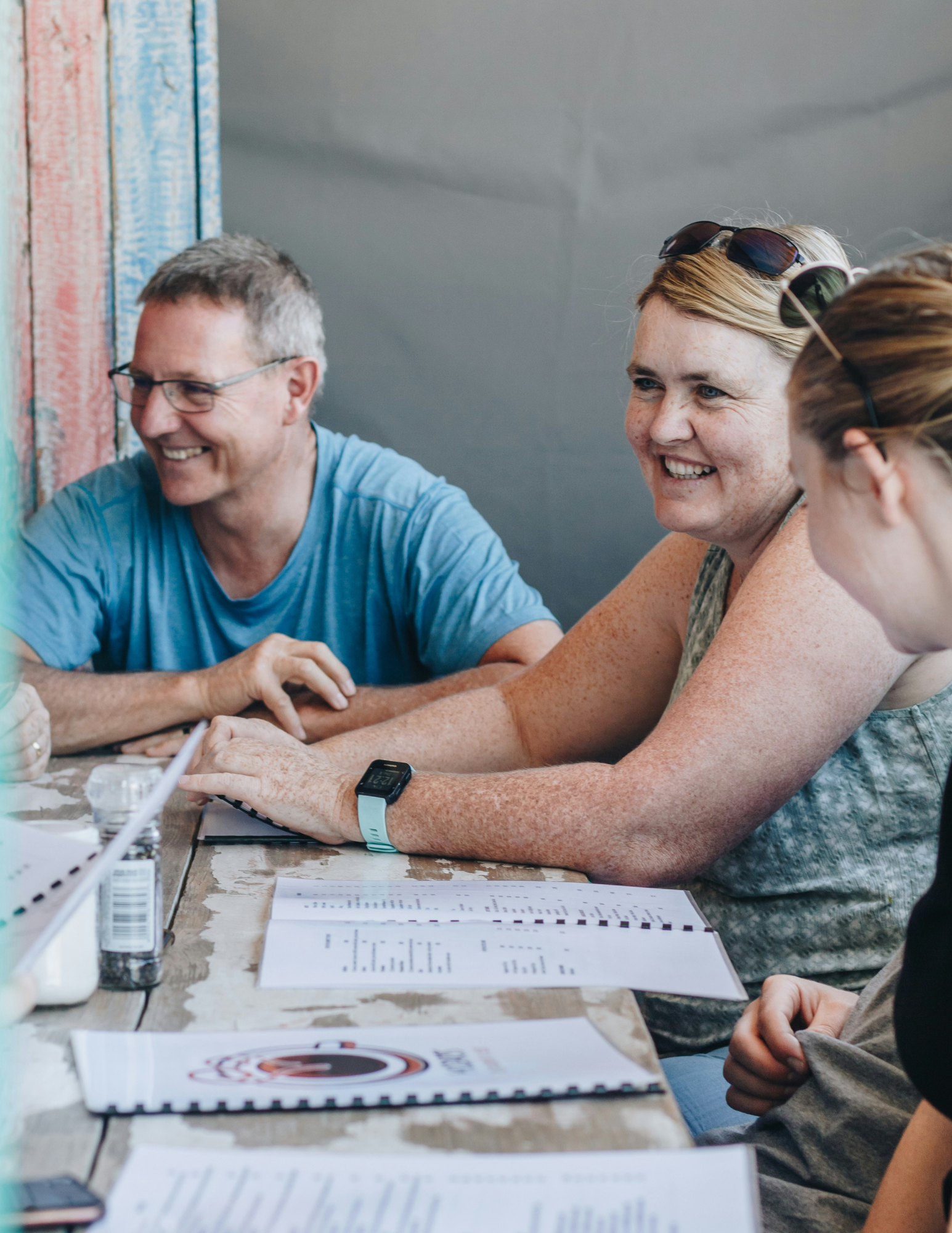
What working together
could look like
Every conversation starts with curiosity and honest inquiry, not assumptions about what the problem is or what the solution should be.
For organizations and communities
That might mean thinking through connection while an idea is still taking shape. It could be a needs assessment that goes beyond attendance numbers, or a program design process that considers belonging from the beginning instead of retrofitting it later. Or it might simply be a place to think out loud about something that isn't working the way you hoped.
For individuals
Social health is something we can all learn about and practice. Neighborship offers workshops that explore what the research says about connection, why it matters for our health and wellbeing, and practical ways to strengthen it in everyday life: at work, in the neighborhood, and in the communities we're part of. Workshops are educational and group-based, and they can be hosted by workplaces, libraries, community centers, and local organizations.
If any of this resonates, I'd love to hear from you.